
GUANGDONG XIEDA INTELLIGENT EQUIPMENT CO., LTD.
Professional manufacturer of storage space

News
News
Xiada Intelligent: What type of shelving is suitable for use in cold storage?
Keywords:
Publish Time:
2025-08-05
Selecting the appropriate shelving type for a freezer (cold storage) requires consideration of the special needs of a low-temperature environment, such as cold resistance, corrosion resistance, space utilization, and operational efficiency. The following are several types of shelving suitable for freezers and their characteristics:
High-Density Storage Shelving
1. Drive-in Rack
- Applicable Scenarios: Concentrated storage of large quantities of similar goods (such as frozen food, seafood products).
- Advantages: Forklifts can directly drive into the rack for operation, reducing the area occupied by aisles and achieving high storage density; the structure is simple and maintenance costs are low, suitable for projects with limited budgets.
- Typical Applications: Long-term storage of single-category frozen products.
2. Double-Deep Rack
- Features: Improves space utilization through a two-way storage design, with lower manufacturing and installation costs.
- Advantages: Balances storage efficiency and economy, especially suitable for companies with tight budgets but requiring high-density storage.
3. Narrow Aisle Rack
- Core Advantages: Reduces forklift aisle width to increase storage capacity; with specialized equipment, it can quickly complete storage and retrieval.
- Flexibility: Height and configuration can be adjusted according to the actual size of the cold storage to meet diverse needs.
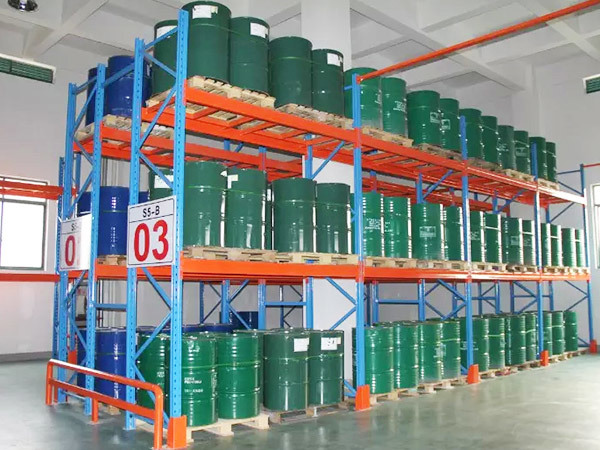
Automated and Semi-Automated Systems
1. Shuttle Rack
- Technological Highlights: Uses a shuttle to automate goods storage and retrieval, significantly reducing labor costs.
- Performance Parameters: Single-layer load capacity can reach 1.5 tons, suitable for efficient management of full-pallet frozen products; supports customization to adapt to extreme low-temperature environments.
- Efficiency Improvement: Operational efficiency is increased by more than 50% compared to traditional methods, reducing personnel exposure time in low-temperature environments.
2. Four-Way Shuttle Rack System
- Intelligent Integration: Can be linked with temperature monitoring to achieve real-time inventory management and precise temperature control.
- Applicable Scale: Ideal choice for large and medium-sized cold chain warehouses, especially suitable for scenarios requiring high-frequency in and out of storage.
3. Automated Automated Warehouse
- Fully Automated Process: Uses stackers, conveyors, and other equipment to complete the entire chain of operations, suitable for large-scale cold chain centers.
- Scalability: Supports modular upgrades to meet capacity expansion needs after business growth.
Customized Heavy-Duty Shelving
1. Cold Storage Dedicated Heavy-Duty Shelving
- Material Characteristics: Uses stainless steel or high-strength steel (such as Q235B/Q355B), with excellent low-temperature deformation resistance and corrosion resistance.
- Design Features: Can be customized in layout according to the weight, size, and height of the cold storage to ensure structural stability and safety.
- Typical Load: Suitable for long-term storage of large quantities of heavy refrigerated food.
2. I-Beam Rack
- Load-Bearing Advantages: Consists of two I-beams to form a load-bearing frame, suitable for long-term storage of large or heavy goods.
- Adjustability: The position of the beams can be flexibly adjusted according to the specifications of the goods to optimize space allocation.
Basic General-Purpose Shelving
1. Static Rack
- Structural Composition: Composed of uprights and beams, supporting multi-layer combinations.
- Applicable Scope: Medium and small frozen food sorting areas or multi-category mixed storage scenarios, strong compatibility and easy installation.
2. Flat Plate Rack
- Special Use: Specifically used for horizontal placement of long and narrow items (such as pipes and bars), ensuring goods stability and visual management.
The selection of freezer shelving should be based on a comprehensive assessment of factors such as goods characteristics (such as volume, weight, turnover rate), storage scale, budget constraints, and automation needs. For example, large quantities of single-category items should prioritize drive-in or shuttle racks; multi-category, high-frequency in and out of storage is more suitable for automated warehouses; while scenarios with limited budgets can consider double-deep or narrow aisle solutions.
Hot Products
Related Articles
Get a free quote
We welcome any inquiry you may have. Tell us about your project to get a free quote.
National Service Hotline
Contact Email
Foshan City, Nanhai District, Shishan Town, Guanyao Ligang Zixia Industrial Zone
Scan to view the website