
GUANGDONG XIEDA INTELLIGENT EQUIPMENT CO., LTD.
Professional manufacturer of storage space

News
News
Guide to the Construction of Special Environmental Storage Racks for Pharmaceuticals
Keywords:
Publish Time:
2025-07-19
The following is a guide to the construction of special environmental storage racks for pharmaceuticals:
I. Preliminary Planning
1. Needs Analysis
- Detailed understanding of the types of products stored in pharmaceutical warehouses, including pharmaceuticals (tablets, capsules, injections, etc.), medical devices (small devices, large equipment parts, etc.), their dimensions, weight, and packaging. For example, for large quantities of tablets, the size of the small packaging needs to be considered to design appropriate inter-layer spacing and shelf unit size.
- Determine the storage capacity. Based on the company's expected inventory and turnover rate, calculate the overall scale of the required shelves. At the same time, consider the possibility of future business expansion and reserve some space.
- Clarify the special environmental requirements of the warehouse, such as temperature (normal temperature warehouse, cool warehouse, cold warehouse, etc.), humidity control range, cleanliness standards, etc. For pharmaceutical products that require cold chain storage, accurately plan the location and load-bearing capacity of the cold storage shelves.
2. Warehouse Layout Design
- According to the storage requirements and in-and-out procedures of pharmaceutical products, reasonably divide the storage area. For example, separate areas for normal temperature pharmaceuticals, cool pharmaceuticals, and refrigerated pharmaceuticals should be set up, and reasonable passage widths should be set to facilitate the passage of forklifts and other handling equipment. The general passage width should be no less than 1.5-2 meters to facilitate the handling of goods and the installation and maintenance of shelves.
- Consider the placement direction of the shelves, and try to make the shelves parallel to the long side of the warehouse, which can improve space utilization. At the same time, reserve enough space for loading, unloading, sorting, and temporary storage of goods.
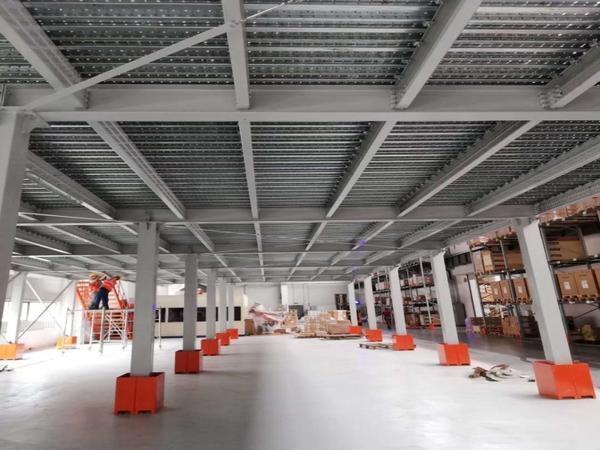
3. Shelf Selection
- Heavy-duty pallet racking: For bulk pharmaceutical products stored in full pallets, such as whole boxes of pharmaceuticals or large medical device packaging boxes, heavy-duty pallet racking is a more suitable choice. It has a high load-bearing capacity, generally reaching 1-5 tons per layer. The shelf height can be determined according to the actual height of the warehouse and the lifting height of the forklift, usually around 6-10 meters. This type of shelf can be accessed by forklift trucks, which is convenient to operate and makes full use of the warehouse space.
- Medium-duty shelving: Suitable for storing small pharmaceutical products, such as bottled pharmaceuticals, small medical devices, etc. The shelves can be made of steel or wood. Wooden shelves have the advantages of anti-slip and anti-collision, but attention should be paid to moisture prevention; steel shelves are more sturdy and durable. The load-bearing capacity of each layer of medium-duty shelving is generally between 200-800 kg, and the layer height can be adjusted according to the size of the pharmaceuticals for convenient classification and storage.
- Flow-through racking: If the turnover rate of pharmaceutical products is high and a first-in, first-out (FIFO) storage method is required, flow-through racking is a good choice. By installing flow-through bars on the shelves, the goods can automatically slide down by their own gravity, realizing first-in, first-out. This type of shelf is especially suitable for storing small packages of pharmaceuticals, such as medicine boxes, etc., which can improve picking efficiency.
- Automated high-bay racking: For large pharmaceutical logistics centers or warehouses with extremely high requirements for storage accuracy and efficiency, automated high-bay racking is an ideal choice. Under the control of the computer system, it can automatically complete the storage and retrieval of goods through stacking cranes and other equipment. This type of shelf can make full use of the height space of the warehouse, with high storage density, but the investment cost is also relatively high.
II. Shelf Design and Material Selection
1. Shelf Design
- Number of layers and layer height: Determine the number of layers and layer height of the shelves according to the size and storage needs of the pharmaceutical products. For example, for infusion bottles with a high height, the layer height should be at least the height of the infusion bottle plus a certain margin, generally between 30-60 cm per layer. At the same time, consider the load balance between different layers to avoid excessive local load.
- Shelf depth: The shelf depth should be determined according to the size of the pallet or goods. For standard pallets (1200mm×1000mm or 1100mm×1100mm), the shelf depth is generally around 800-1000mm. If storing small medical device boxes, the depth can be appropriately reduced to improve space utilization.
- Protective facilities: In order to prevent pharmaceutical products from being damaged during storage, the shelves should be equipped with necessary protective facilities. For example, install anti-collision corner protectors on the beams and shelves to prevent damage to the shelves and goods when the forklift collides; for some fragile pharmaceuticals, buffer materials such as sponge pads and foam boards can be set up on the shelves.
2. Material Selection
- Steel: It is the main material of the shelves, with good load-bearing capacity and stability. For heavy-duty shelves and automated high-bay racking, high-quality steel should be selected, such as Q235 steel, which has a higher yield strength and can ensure that the shelves will not deform when bearing heavy objects. The surface treatment of steel is also important, generally using hot-dip galvanizing or powder coating. Hot-dip galvanizing can enhance the corrosion resistance of the shelves, and powder coating can provide better appearance and additional protection.
- Wood: In medium-duty shelving, wooden shelves are a common choice. Dry, crack-free high-quality wood should be selected, such as multi-layer plywood or solid wood. The thickness of the wood is generally between 15-25mm to ensure that it has sufficient strength to bear the pharmaceutical products. At the same time, the wood should be treated with fire prevention and moisture prevention to prevent the wood from becoming damp and rotten or causing fires.
- Plastic: For the storage of some light pharmaceutical products, such as small medicine bottles and medicine boxes, plastic shelves can be used. Plastic shelves have the advantages of light weight, corrosion resistance, and insulation. However, plastic materials that meet food-grade or pharmaceutical-grade standards should be selected to ensure that they will not contaminate pharmaceutical products.
III. Special Environmental Considerations
1. Temperature and Humidity Control
- Cool warehouse shelves: The temperature of the cool warehouse generally requires control below 20℃. In shelf design, ventilation issues should be considered to avoid heat generation due to poor ventilation. Ventilation channels can be set between the shelves, or ventilation devices such as small fans can be installed on the shelves. At the same time, the material of the shelves should be able to adapt to the cool environment to prevent rust and corrosion.
- Cold storage shelving: The temperature in cold storage is usually between 2-8℃ (refrigerated storage) or lower (frozen storage). The shelf material must be able to withstand low temperatures, generally using stainless steel or special low-temperature steel. Stainless steel shelves have good corrosion resistance and low-temperature performance, but are more expensive. In the design of cold storage shelves, attention should be paid to preventing cold bridging, that is, avoiding direct contact between the metal parts of the shelves and the insulation layer of the panels, otherwise it will reduce the insulation effect of the cold storage. In addition, the connecting parts of the cold storage shelves should also use low-temperature resistant materials, such as special plastics or low-temperature alloys.
- Humidity control: For some humidity-sensitive pharmaceutical products, such as capsules, the storage area where the shelves are located should be equipped with dehumidification equipment. Humidity sensors can be installed near the shelves to monitor humidity changes in real time, and the humidity can be controlled within a suitable range through dehumidifiers and other equipment. At the same time, the shelf material should also have certain moisture-proof performance, such as using moisture-proof coatings or using wood with good moisture-proof performance.
2. Cleanliness requirements
- Clean shelves: For some sterile drugs or medical devices with high cleanliness requirements, clean shelves must be used. The material of clean shelves is generally selected as stainless steel, and the surface must be polished to achieve a certain cleanliness standard. The design of the shelves should avoid dead corners where dust accumulates, such as using rounded corners. In the clean room, the installation and maintenance of the shelves must be carried out strictly in accordance with the clean operation procedures to prevent pollution.
- Air filtration: In storage areas with cleanliness requirements, in addition to using clean shelves, an air filtration system must also be equipped. High-efficiency particulate air (HEPA) filters can be installed at the ventilation openings of the warehouse to filter out dust particles and microorganisms in the air to ensure the cleanliness of the storage environment.
IV. Shelf Installation and Maintenance
1. Installation
- Infrastructure construction: Before installing the shelves, the foundation should be treated according to the type and load-bearing requirements of the shelves. For heavy-duty shelves and automated three-dimensional shelves, a concrete foundation needs to be poured to ensure the stability of the shelves. The depth and strength of the foundation should be determined according to the load-bearing capacity and height of the shelves. Generally, the load-bearing capacity of the foundation should not be less than the pressure on the ground when the shelves are fully loaded.
- Installation process: Install according to the shelf installation instructions to ensure the verticality and horizontality of the shelves. During the installation process, pay attention to the firmness of the connection of the shelf components, especially for high-level shelves and heavy-duty shelves, the connecting bolts should be tightened to prevent the shelves from shaking or collapsing during use. For automated three-dimensional shelves, the installation and debugging of equipment such as stacker cranes are also required to ensure precise coordination with the shelves.
2. Maintenance
- Daily inspection: Regularly inspect the shelves, including checking whether the structure of the shelves is deformed, whether the connecting parts are loose, and whether the shelves are flat. Problems found should be dealt with promptly, such as tightening loose bolts and replacing deformed parts. At the same time, check whether the protective facilities on the shelves are intact, such as anti-collision corners and buffer materials.
- Cleaning and maintenance: Regularly clean the shelves according to the warehouse environment and usage. For ordinary shelves, you can use a damp cloth to wipe off the dust on the surface; for clean shelves, use special cleaning agents and cleaning tools and clean them according to the clean operation procedures. During the cleaning process, care should be taken to avoid damaging the surface coating or material of the shelves.
- Anti-corrosion treatment: For shelves in humid or corrosive environments, regular anti-corrosion treatment should be carried out. Anti-rust paint can be reapplied or other anti-corrosion measures can be adopted, such as hot-dip galvanizing, to extend the service life of the shelves.
Hot Products
Related Articles
Get a free quote
We welcome any inquiry you may have. Tell us about your project to get a free quote.
National Service Hotline
Contact Email
Foshan City, Nanhai District, Shishan Town, Guanyao Ligang Zixia Industrial Zone
Scan to view the website