
GUANGDONG XIEDA INTELLIGENT EQUIPMENT CO., LTD.
Professional manufacturer of storage space

News
News
Stabilization measures for shelving when the warehouse floor is uneven
Keywords:
Publish Time:
2025-07-21
When the warehouse floor is uneven, several measures can be taken to secure the shelves:
I. Floor Treatment
1. Partial Leveling
- Using shims or pads: For small uneven areas, shims or pads can be placed where the bottom of the shelf contacts the floor. These shims can be made of metal (such as steel plates) or hard plastic. For example, if the floor is recessed in one corner of the shelf bottom, a steel plate shim of appropriate thickness can be placed there so that the shelf bottom can make stable contact with the floor, distributing the weight of the shelf and increasing stability. The shape of the shim can be customized according to the shape of the shelf bottom, such as square or round.
- Laying a mortar or fine stone concrete layer: If the unevenness of the floor in the shelf installation area is more serious, a layer of mortar or fine stone concrete can be laid to level the floor. First, the floor needs to be cleaned to remove debris and dust, and then, according to the slope and unevenness of the floor, a certain thickness (generally not less than 3-5 cm) of mortar or fine stone concrete is poured. During the pouring process, a level should be used to level the floor to ensure that the flatness meets the shelf installation requirements. This treatment method can provide a relatively flat base for the shelf, enhancing the overall stability of the shelf.
2. Adjusting the foundation
- Adding anchor bolts: If the unevenness of the warehouse floor is caused by foundation settlement, and the shelf is high and carries heavy goods, consider installing anchor bolts at the bottom of the shelf. One end of the anchor bolt is fixed to the ground (it can be fixed by drilling, pouring concrete, etc.), and the other end is connected to the connecting piece at the bottom of the shelf. When the ground has slight settlement or the shelf is subjected to external forces, the anchor bolts can play a certain regulating and fixing role to prevent the shelf from tilting. When installing anchor bolts, the specifications, length, and spacing of the anchor bolts need to be accurately calculated according to the weight, size of the shelf, and the actual situation of the ground.
- Using independent foundations: For some large, heavy shelves, such as high-bay shelves in automated high-bay warehouses, when the ground is uneven and there is a risk of significant future settlement, an independent foundation can be made for each shelf column or shelf group. The independent foundation can be a concrete pier, the depth of which should be determined according to the geological conditions, and generally should go deep into the stable soil layer. Embedded parts for connecting with the shelf columns are reserved on the concrete pier, and the shelf columns are fixed to the independent foundation through precise installation technology. This can ensure the stability of the shelf within its own foundation range and reduce the impact of uneven ground on the shelf.
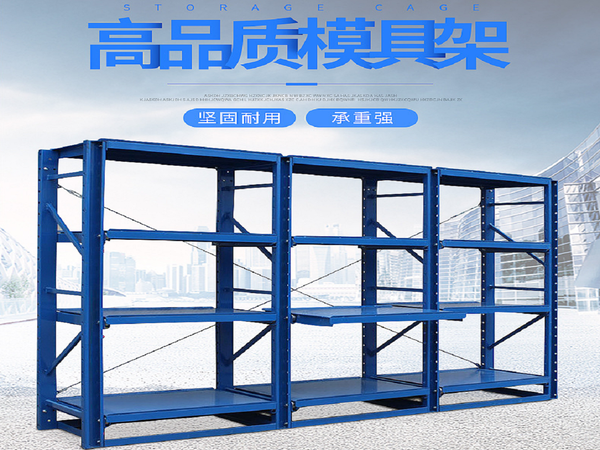
II. Shelf Structure
1. Strengthening the bottom structure of the shelf
- Adding beams or support rods: Adding horizontal or vertical support structures to the bottom of the shelf can enhance the stability of the shelf. For example, for light shelves, cross support rods can be installed between the beams of the bottom frame to form a triangular stable structure. These support rods can be made of angle steel or steel pipes and fixed to the bottom frame of the shelf by welding or bolting. For heavy shelves, additional beams can be added to the bottom, and the beams can be firmly connected to the shelf columns, such as using high-strength bolted connections or welding, to enhance the load-bearing capacity and anti-deformation ability of the shelf bottom.
- Installing chassis expansion devices: Some shelves are designed with chassis expansion devices, such as retractable fork structures or flat structures. When the ground is uneven, these expansion devices can be extended to increase the contact area with the ground. For example, on some mobile shelves, the chassis expansion device can be automatically or manually expanded when the shelf is parked, like putting on a pair of "big shoes" for the shelf, which can better adapt to uneven ground and improve the stability of the shelf.
2. Strengthening the overall connection of the shelf
- Adding tie rods and cross braces: Installing tie rods and cross braces between the columns of the shelf can effectively improve the overall stability of the shelf. Tie rods generally use round steel or steel wire ropes of appropriate diameter, one end fixed to the top beam of the shelf, and the other end fixed to the bottom beam or anchor point on the ground. Cross braces are installed on the side of the shelf, usually made of hollow steel or angle steel, forming multiple triangular stable structures with the shelf columns and beams. These tie rods and cross braces can resist the forces on the shelf in the vertical and horizontal directions, preventing the shelf from collapsing due to shaking or tilting caused by uneven ground.
- Using high-strength connecting pieces: Using high-strength connecting pieces at the connection points of various parts of the shelf, such as columns and beams, beams and shelves, can enhance the structural stability of the shelf. For example, using high-strength bolts, nuts, and washers to connect shelf components, and installing them according to the correct tightening torque to ensure a tight connection. For some key connection points, welding can also be used for reinforcement, but attention should be paid to welding quality to avoid welding stress causing shelf deformation.
III. Cargo Loading and Storage
1. Reasonable planning of cargo storage location
- Center of gravity control: In warehouses with uneven ground, pay special attention to the center of gravity of cargo storage. Try to place heavier goods on the bottom or near the bottom of the shelf to lower the center of gravity of the shelf. For example, on a multi-layer storage shelf, place heavy objects such as parts of large machinery equipment on the bottom one or two layers, and lighter packaged items on the upper layers. This can increase the stability of the shelf and reduce the risk of the shelf tipping over due to uneven ground.
- Symmetrical storage: Storing goods according to the principle of symmetry can make the shelf bear more evenly. On each layer of the shelf, try to distribute the goods symmetrically on both sides. For example, on a double-sided shelf, place goods of the same weight and volume on the corresponding positions on the left and right sides to avoid overloading one side and causing the shelf to tilt.
2. Using auxiliary fixing devices
- Cargo straps or ropes: For goods with irregular shapes or that are easy to roll, straps or ropes can be used to secure them to the shelf. For example, for cylindrical goods, such as oil drums, special cargo straps can be used to wrap and fix them to the shelf boards to prevent the goods from falling off when the shelf shakes, and it also helps to maintain the balance of the shelf.
- Anti-slip mats and baffles: Placing anti-slip mats on the shelves increases the friction between the goods and the shelves, preventing the goods from sliding. Baffles can be installed on the edges of the shelves; the height of the baffles should be determined according to the size and weight of the goods. For example, on a shelf storing small parts, installing baffles 5-10 cm high can effectively prevent parts from falling off when the shelf shakes, thus ensuring the stability of the shelf.
Hot Products
Related Articles
Get a free quote
We welcome any inquiry you may have. Tell us about your project to get a free quote.
National Service Hotline
Contact Email
Foshan City, Nanhai District, Shishan Town, Guanyao Ligang Zixia Industrial Zone
Scan to view the website