
GUANGDONG XIEDA INTELLIGENT EQUIPMENT CO., LTD.
Professional manufacturer of storage space

News
News
Xiada Intelligent Equipment: What kind of equipment is usually found in warehouses?
Keywords:
Publish Time:
2025-07-28
Warehouses are typically equipped with a variety of equipment to achieve efficient and safe storage and management of goods. The following are several common categories of major equipment and their functions:
1. Handling and Loading/Unloading Equipment
- Forklifts: Used for loading, unloading, stacking, and short-distance transportation of palletized goods. They are available in electric and internal combustion engine types to suit different needs.
- Stackers: Compact and suitable for environments with limited space or requiring flexible operation. They can lift goods to higher positions for stacking.
- Conveyor Belt Systems: Achieve continuous automated material handling through electrically driven belts or chains, especially suitable for high-volume, repetitive handling tasks.
- AGV (Automated Guided Vehicle): Can autonomously navigate and complete specified actions without manual operation, significantly improving logistics efficiency in complex environments.
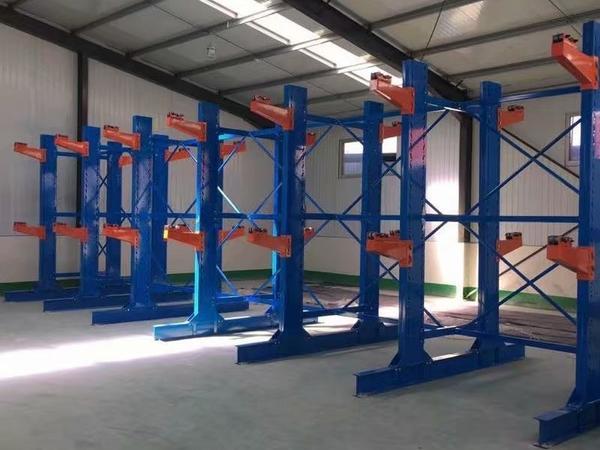
2. Storage Equipment
- Shelving: Includes various designs such as general-purpose and specialized types. Based on load capacity, they are classified as light-duty (commonly used in supermarkets), medium-duty (suitable for manufacturing), and heavy-duty (for storing machinery). Based on height, they are classified as low, medium, and high. Special forms such as drive-in racking and gravity flow racking can optimize space utilization. For example, drive-in racking is suitable for storing large quantities of a few varieties, while gravity flow racking utilizes the weight of the goods for flow management.
- Pallets: As a unit load device, they are made of materials such as wood and plastic. Used with handling machinery, they facilitate the protection of goods and improve turnover efficiency. Common types include flat pallets, column pallets, and box pallets.
3. Packaging and Sealing Equipment
- Packaging/Sealing Machines: Bundle or seal products to ensure stability and integrity during transportation.
- Vacuum Packaging Machines: Extend the shelf life of food by removing air to prevent oxidation and spoilage.
4. Measurement and Inspection Equipment
- Electronic Scales: Accurately measure the mass of objects, widely used in commercial transactions and industrial production.
- Barcode Scanners: Quickly read barcode information to speed up data entry in the warehousing/out-of-warehouse process.
- Hygrometers: Monitor environmental conditions to protect sensitive materials from damage.
5. Safety Protection Facilities
- Firefighting Equipment (Fire Extinguishers, Fire Hydrants): Crucial tools for responding to sudden fire accidents.
- Monitoring Systems and Alarm Devices: Real-time monitoring of the internal and external conditions of the warehouse to prevent theft or other illegal intrusions; smoke detectors further enhance safety.
6. Information Technology Support Systems
- WMS (Warehouse Management System): An integrated software solution that optimizes resource allocation throughout the entire process from order receipt to shipment.
- RFID Technology: Uses radio waves to achieve contactless information exchange, which is more flexible, convenient, and less prone to damage or loss compared to traditional barcodes.
7. Other Auxiliary Equipment
- Floor Scales: Fixed weighing instruments for determining the weight of vehicles or goods in vehicles, often installed flush with the ground.
- Automated Storage and Retrieval System (AS/RS): A computer-controlled intelligent storage and retrieval solution that significantly improves space utilization and operational efficiency.
- RF Terminal Devices: Handheld reading and writing devices combined with radio frequency identification technology to quickly and accurately obtain item information, improving the accuracy of inventory management.
The reasonable configuration of these devices not only improves the operational efficiency of the warehousing system but also enhances safety and management accuracy, making it an important part of the modern logistics system.
Hot Products
Related Articles
Get a free quote
We welcome any inquiry you may have. Tell us about your project to get a free quote.
National Service Hotline
Contact Email
Foshan City, Nanhai District, Shishan Town, Guanyao Ligang Zixia Industrial Zone
Scan to view the website