
GUANGDONG XIEDA INTELLIGENT EQUIPMENT CO., LTD.
Professional manufacturer of storage space

News
News
What precautions should be taken when installing warehouse shelves?
Keywords:
Publish Time:
2025-08-21
In logistics and warehouse management, properly and securely installing warehouse shelves is the foundation for improving storage efficiency and ensuring the safety of goods. As an experienced website editor, this article will delve into the key points that must be noted during the installation of warehouse shelves, aiming to help readers avoid common mistakes, maximize warehouse space utilization, and ensure smooth operational processes. The following are detailed guidance suggestions:
1. Preliminary Planning and Measurement
Accurate Layout Design: Before starting installation, it is essential to conduct a comprehensive survey of the warehouse. Plan the location and arrangement of shelves based on the actual area, height, and characteristics of the goods (such as size and weight). Use professional software or hand-drawn sketches to assist in design, ensuring sufficient aisle width between each row of shelves for forklifts or other handling equipment to pass through. Also, consider the safety distances required by fire regulations.
Floor Load Capacity Assessment: Different types of shelves and their fully loaded states exert different pressures on the floor. Therefore, after selecting the location, confirm whether the floor in that area has sufficient load-bearing capacity. If necessary, consult a structural engineer or conduct professional load testing to avoid foundation sinking or damage caused by overloading.
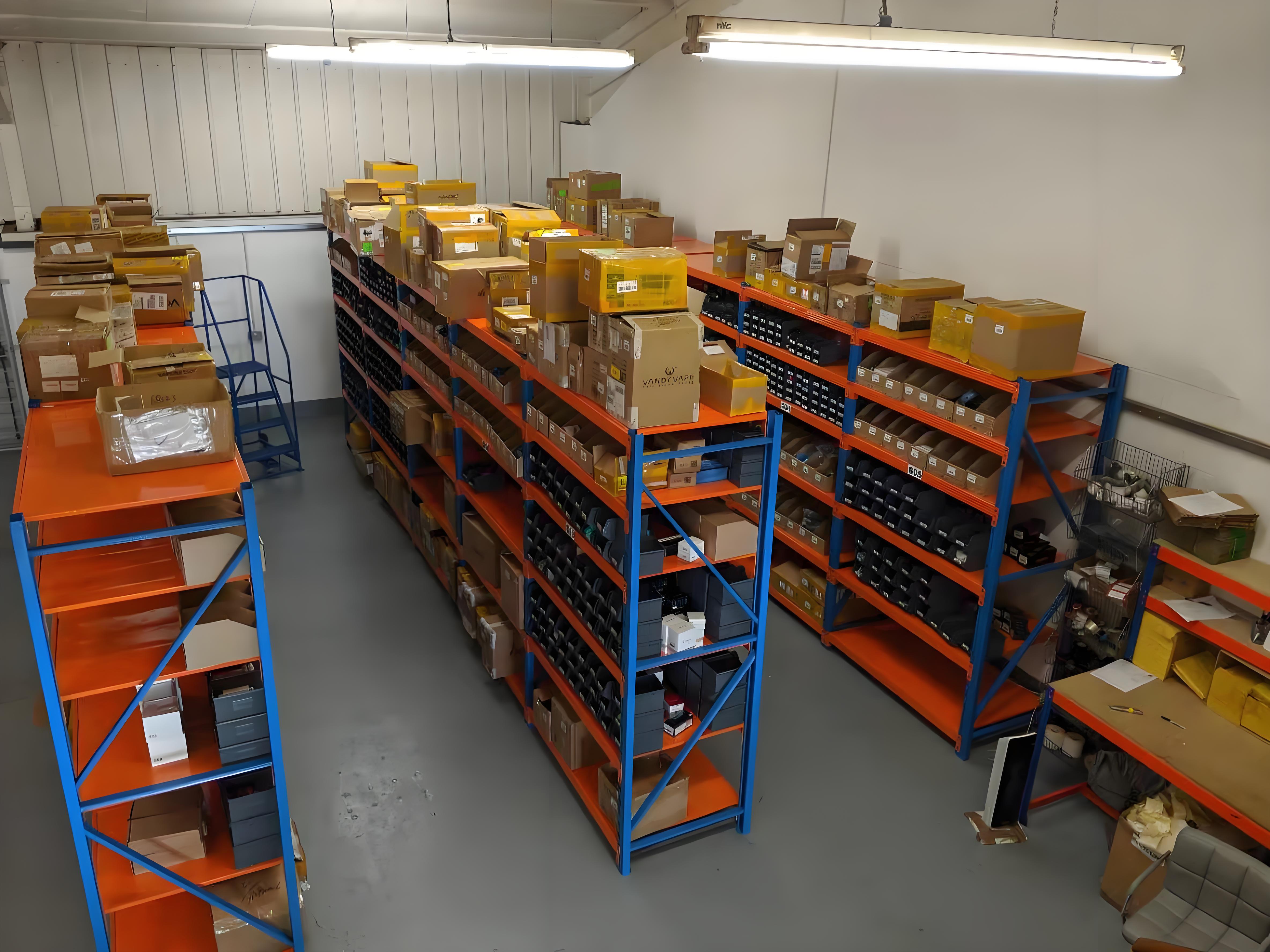
2. Material Inspection and Preparation
Quality Control: All purchased shelf components (including columns, beams, shelves, etc.) should be carefully checked for material certificates and appearance quality to ensure there are no deformations, cracks, or rust issues. Prioritize products from reputable suppliers to guarantee the overall structure's reliability and durability.
Confirmation of Complete Accessories: When unpacking and inspecting goods, check each component's quantity and specifications against the list one by one. Small parts such as connectors (e.g., bolts, nuts), safety pins, and other small items are easy to overlook but are key factors in ensuring shelf stability.
3. Professional Team Collaboration and Training
Form a Professional Installation Team: Although some simple shelves may allow self-assembly, for large heavy-duty shelf systems, it is strongly recommended to have installation performed by a manufacturer-certified professional team. They are not only familiar with product features but can also effectively handle unexpected situations on site.
Safety Education for Operators: Before officially starting work, provide necessary safety training to all personnel involved in installation, including but not limited to the correct wearing of personal protective equipment, precautions for working at heights, and self-rescue and mutual aid methods in emergencies, ensuring the safety of the entire construction process.
4. Strictly Follow Installation Steps According to the Manual
Follow Assembly Sequence: Operate step-by-step strictly according to the installation manual provided by the manufacturer, starting from the basic frame construction, then adding horizontal braces and diagonal braces in sequence to enhance stability, and finally laying the shelves. Do not arbitrarily change the design or skip any steps to avoid affecting the final result.
Adjust Levelness and Verticality: Use a level and plumb line tools to repeatedly calibrate the parallelism between columns and the verticality of the overall structure. Small deviations can accumulate and cause serious safety hazards. This is especially important in multi-layer stacking situations.
5. Post-Installation Inspection and Maintenance
Comprehensive Acceptance Testing: After initial assembly, do not rush to use the shelves. First, conduct stability tests under no-load conditions, then gradually increase the load until reaching the design capacity limit, observing for any abnormal shaking or noises. Adjust and repair promptly if problems are found.
Regular Inspection and Maintenance: Even after passing acceptance, establish a routine inspection mechanism. Regularly check for loose screws, paint peeling, and other potential wear signs, and keep records. For exposed parts, apply anti-rust oil appropriately to extend service life.
Successful warehouse shelf installation is not simply about assembling parts together; it involves meticulous planning, strict material selection, professional construction, and continuous attention and maintenance. Only by comprehensively considering all the above aspects can a highly efficient and safe storage environment truly be created. Hopefully, this article can provide valuable reference for those undertaking such projects!
Hot Products
Related Articles
Get a free quote
We welcome any inquiry you may have. Tell us about your project to get a free quote.
National Service Hotline
Contact Email
Foshan City, Nanhai District, Shishan Town, Guanyao Ligang Zixia Industrial Zone
Scan to view the website