
GUANGDONG XIEDA INTELLIGENT EQUIPMENT CO., LTD.
Professional manufacturer of storage space

News
News
What should be paid attention to when purchasing loft-style shelves?
Keywords:
Publish Time:
2025-08-05
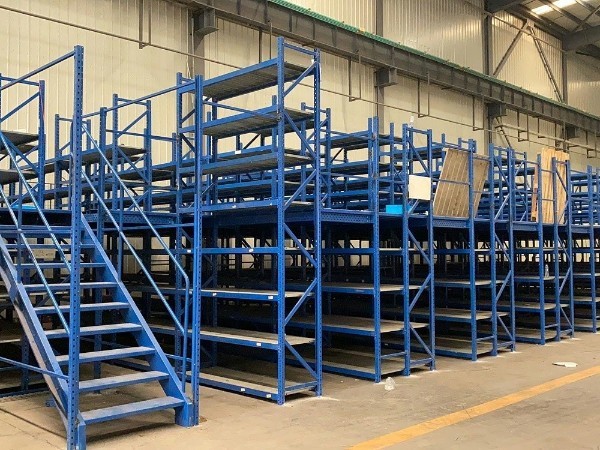
When purchasing multi-tier racking, several key factors must be considered to ensure safety, practicality, and cost-effectiveness. The following are detailed considerations:
Design and Planning Related
1. Warehouse Infrastructure Assessment
- Floor load-bearing capacity: Multi-tier structures exert significant pressure on the floor. Confirm in advance whether the warehouse floor can withstand the expected load;
- Height restrictions: A minimum clear height of 4.2 meters is recommended (except for special needs) to meet height and operational space requirements; if built against a wall, a 100mm safety distance must be reserved.
2. Functionality Matching Analysis
- Goods characteristic matching: Select appropriate specifications based on the size, weight, and access frequency of stored items. For example, heavy goods require reinforced steel structure support; also clarify the in/out logic (such as FIFO or LIFO) to determine the racking layout;
- Equipment compatibility considerations: If using forklifts or other mechanical equipment, the design must incorporate parameters such as turning radius and travel lanes to ensure smooth operation.
Material and Process Standards
1. Material Quality Control
- Surface treatment process: Check whether the powder coating is even and smooth, avoiding paint leakage or peeling. Such defects directly affect rust prevention performance and service life;
- Structural component integrity: Verify that screws, connecting pieces, and other components are complete and matched. Missing parts may lead to installation difficulties or safety hazards; prioritize the use of steel or other specified materials that meet national standards to ensure strength and durability.
2. Safety Protection Configuration
- Protective device settings: The edges of the platform should be fitted with guardrails 1200-1500mm high, and equipped with anti-slip stairs and other auxiliary facilities to reduce the risk of high-altitude work;
- Floor selection: Steel plates, steel buckle plates, or wooden boards can be selected as paving materials. Steel buckle plates have the best overall performance but are more expensive. Decisions should be made based on budget and usage scenarios.
Customization and Scalability
1. Personalized Scheme Development
- Customized principle: Based on the actual warehouse area, product categories, and management processes, exclusive designs are created to avoid low utilization rates caused by standardized products;
- Dynamic adjustment reservation: By adding side beams, interfaces are reserved for future expansion, allowing for flexible modifications as business grows.
2. Environmental Adaptability Optimization
- Special condition response: For humid, corrosive, or extreme temperature environments, special treatment schemes such as corrosion-resistant coatings and stainless steel components are selected;
- Ergonomics application: Reasonably plan the inter-floor spacing (usually 2.2m~2.8m), balancing employee operational convenience and handling equipment passage needs.
Supplier Selection and Service Guarantee
1. Qualification and Capability Audit
- Case experience verification: Prioritize manufacturers with experience in similar projects. Manufacturers who provide free on-site measurement services are more likely to achieve precise matching;
- After-sales support system: Choose a partner that can provide long-term maintenance, emergency response, and technical upgrade support to ensure full life-cycle management.
2. Cost-Effectiveness Balance
- Full-cycle cost accounting: Do not simply pursue low prices. Comprehensive assessment of structural stability, safety, and later maintenance costs on warehouse efficiency should be considered;
- Scheme comparison analysis: Different manufacturers may have different design ideas. It is recommended to obtain multiple quotation schemes for horizontal comparison, focusing on the rationality of load distribution and space utilization indicators.
The procurement of multi-tier racking is a systematic project that requires comprehensive consideration of warehouse conditions, goods characteristics, safety requirements, material processes, customized expansion, and supplier services. Only by comprehensively weighing these key points can the most suitable racking system be selected to achieve efficient utilization and safe and reliable operation of warehouse space.
Hot Products
Related Articles
Get a free quote
We welcome any inquiry you may have. Tell us about your project to get a free quote.
National Service Hotline
Contact Email
Foshan City, Nanhai District, Shishan Town, Guanyao Ligang Zixia Industrial Zone
Scan to view the website