
GUANGDONG XIEDA INTELLIGENT EQUIPMENT CO., LTD.
Professional manufacturer of storage space

News
News
Comprehensive Management and Selection Strategies for High-Quality Warehouse Racking
Keywords:
Publish Time:
2025-07-11
To avoid low-quality warehouse racking, strict control is needed throughout the procurement, installation, use, and maintenance processes. The following key strategies will help you select and use high-quality racking systems, avoiding safety hazards and long-term cost waste:
I. Avoidance Strategies During Procurement
- Choose Reliable Suppliers
- Verify if the supplier possesses ISO 9001 Quality Management System Certification or relevant industry certifications (such as SEMA certification, RMI standards).
- Prioritize suppliers with years of industry experience and successful case studies, and request customer reviews or on-site case study visits.
- Verify if the supplier possesses ISO 9001 Quality Management System Certification or relevant industry certifications (such as SEMA certification, RMI standards).
- Focus on Materials and Processes
- Steel Quality :Require the supplier to specify the steel type (such as cold-rolled steel, Q235 steel) and thickness (such as upright thickness ≥1.2mm), avoiding the use of inferior recycled steel.
- Surface Treatment :Check if it uses Electrostatic Powder Coating or Hot-dip Galvanizing , ensuring rust and wear resistance (higher corrosion resistance is required for special environments such as cold storage).
- Welding Process :Welds should be uniform and firm, without any leakage or poor welds. Key areas (such as the connection between uprights and beams) require reinforcement.
- Steel Quality :Require the supplier to specify the steel type (such as cold-rolled steel, Q235 steel) and thickness (such as upright thickness ≥1.2mm), avoiding the use of inferior recycled steel.
- Clarify Load Capacity and Design Specifications
- Based on the weight of the warehouse goods and the storage method (such as pallet racking, flow rack) Accurately calculate the load-bearing requirements , avoiding overload risks.
- Require the supplier to provide Structural Design Drawings and Mechanics Simulation Report , ensuring racking stability (such as anti-deformation ability under earthquakes or forklift collisions).
- Check the uprights and beams’ Cross-Sectional Design (such as whether the butterfly hole design is standard), ensuring compatibility and scalability.
- Based on the weight of the warehouse goods and the storage method (such as pallet racking, flow rack) Accurately calculate the load-bearing requirements , avoiding overload risks.
- Contractual Protection
- Clearly specify in the contract the Quality Guarantee Period (such as 5-10 years), after-sales service scope, and compensation clauses for non-compliant racking.
- Require the supplier to provide Third-Party Inspection Report (such as SGS certification), avoiding false advertising.
- Clearly specify in the contract the Quality Guarantee Period (such as 5-10 years), after-sales service scope, and compensation clauses for non-compliant racking.
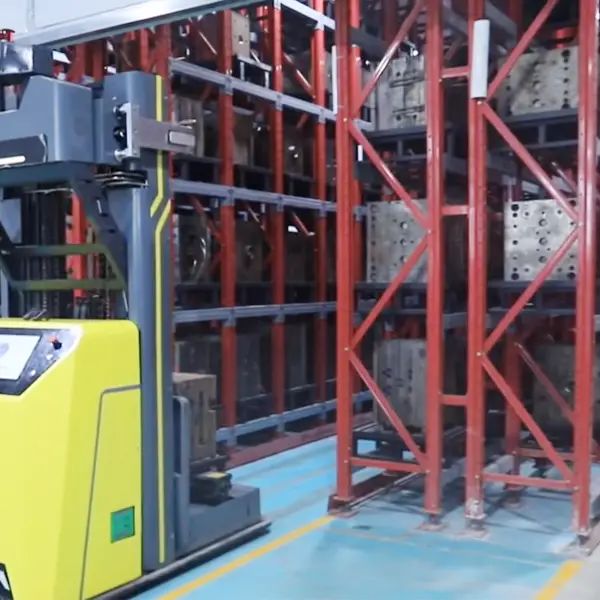
II. Installation and Acceptance Precautions
- Professional Installation Team
- Avoid self-installation or hiring unprofessional personnel, ensuring that the racking is installed according to Manufacturer’s Specifications (such as bolt torque, verticality error ≤2%).
- Check the ground flatness, and if necessary, perform Floor Reinforcement (such as epoxy flooring or embedded steel plates), preventing racking tilt.
- Avoid self-installation or hiring unprofessional personnel, ensuring that the racking is installed according to Manufacturer’s Specifications (such as bolt torque, verticality error ≤2%).
- Strict Acceptance Process
- Use professional tools to measure the racking’s Verticality, Levelness and Diagonal Error , ensuring compliance with industry standards (such as EN 15620).
- Conduct Load Testing :Gradually load to 1.2 times the rated load capacity, lasting 24 hours, observing for any deformation or unusual sounds.
- Check if safety accessories are complete, such as Crash Barriers, Upright Protectors, Load Limiters 。
- Use professional tools to measure the racking’s Verticality, Levelness and Diagonal Error , ensuring compliance with industry standards (such as EN 15620).
III. Standard Operation of Use and Maintenance
- Avoid Overload and Improper Use
- Clearly mark the Maximum Load Limit for each layer of racking, strictly prohibiting overloading or concentrated stacking of heavy objects.
- Use standardized pallets to ensure even distribution of goods, avoiding one-sided force (such as racking distortion caused by improper forklift operation).
- Clearly mark the Maximum Load Limit for each layer of racking, strictly prohibiting overloading or concentrated stacking of heavy objects.
- Regular Inspection and Maintenance
- Monthly Inspection :Check if bolts are loose, beams are deformed, and uprights have rust or collision marks.
- Annual In-depth Inspection :Entrust a professional institution to conduct Structural Safety Assessment , focusing on weld inspection and foundation stability.
- Replace damaged parts in time, and do not use non-original parts for repair.
- Monthly Inspection :Check if bolts are loose, beams are deformed, and uprights have rust or collision marks.
- Environment and Equipment Management
- Control warehouse temperature and humidity (such as humidity ≤60%), preventing steel rust; use galvanized or sprayed racking in corrosive environments.
- Standardize forklift operation, setting Speed Limits and Racking collision warning signs ,reducing the risk of collisions.
- Control warehouse temperature and humidity (such as humidity ≤60%), preventing steel rust; use galvanized or sprayed racking in corrosive environments.
IV. Solutions for Special Scenarios
- High-bay racking (≥10 meters) :Requires additional horizontal pull rods or back net support ,and reinforcement of the steel structure roof connection if necessary.
- Automated warehouse (AS/RS) :Higher racking accuracy is required (error ≤ ±1mm), and joint acceptance with the automated equipment supplier is required.
- Second-hand racking :Before purchasing, it is necessary to conduct full-size measurement and flaw detection ,to avoid hidden damage.
V. Balancing Cost and Quality
- Reasonable selection :Light-duty racking (300-500kg/layer) can use domestic steel; for heavy-duty racking (1 ton or more), it is recommended to choose imported steel or reinforced design.
- Phased procurement :Gradually expand the racking system according to business growth, avoiding excessive one-time procurement leading to waste of funds.
- Utilize insurance :Insure the racking with property insurance and liability insurance ,to transfer unexpected risks.
Through the above measures, you can avoid substandard racking from the source and extend the service life of the racking through scientific management. The key is to implement quality control throughout the entire life cycle of the racking, rather than just focusing on procurement costs. If the budget is limited, you can choose modular design racking, reducing the cost of non-critical components while ensuring the quality of the core structure.
Hot Products
Related Articles
Get a free quote
We welcome any inquiry you may have. Tell us about your project to get a free quote.
National Service Hotline
Contact Email
Foshan City, Nanhai District, Shishan Town, Guanyao Ligang Zixia Industrial Zone
Scan to view the website