
GUANGDONG XIEDA INTELLIGENT EQUIPMENT CO., LTD.
Professional manufacturer of storage space

News
News
Semiconductor Enterprise Warehouse Racking: Refined Storage and Optimal Solutions
Keywords:
Publish Time:
2025-07-12
The semiconductor industry has high-precision, high-value, and high-cleanliness storage needs. The warehousing management of raw materials (such as wafers and photoresists), semi-finished products (packaging substrates), and finished products (chips) directly affects production efficiency and product yield. Traditional warehousing methods are difficult to meet the special requirements of semiconductor companies, so it is necessary to select appropriate rack types based on the characteristics of different materials and combine intelligent management technologies to achieve an efficient, safe, and pollution-free storage environment.
This article will systematically introduce the commonly used types of storage racks in semiconductor companies, analyze their applicable scenarios, and provide selection suggestions to help companies optimize warehouse management.
I. Core Requirements of Semiconductor Warehousing
1. High Cleanliness (Cleanroom Compatibility)
Materials such as wafers and masks need to be stored in a dust-free environment to avoid particle contamination.
Rack materials need to be anti-static (ESD) and corrosion-resistant, usually using stainless steel or special coatings.
2. High-Precision Access (Precision Handling)
Wafers and chips are fragile and require anti-shock and anti-scratch designs.
Automated equipment (such as robotic arms and AGVs) needs to seamlessly interface with the racks.
3. Temperature and Humidity Control (Environmental Stability)
Some chemicals (such as photoresists) need to be stored at constant temperature and humidity.
Racks need to be compatible with environmental control systems (such as nitrogen cabinets and humidity-proof cabinets).
4. Traceability
Through WMS (Warehouse Management System) and RFID/barcode technology, realize the full process tracking of materials.
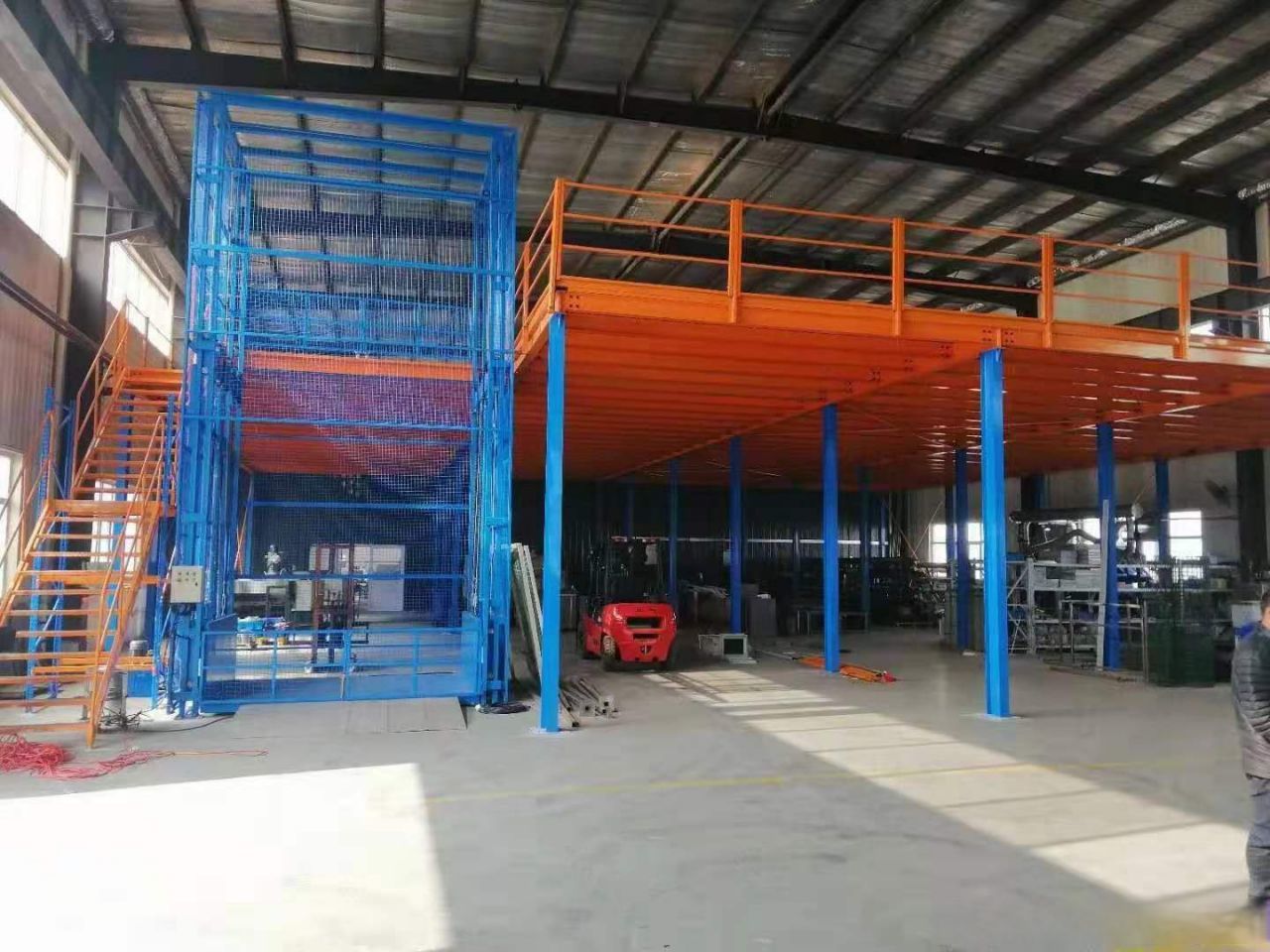
II. Commonly Used Rack Types and Applicable Scenarios in Semiconductor Companies
1. Wafer Storage Racks (Wafer Racking)
Design Features :
Multi-layer partitioned design, each layer stores wafer boxes (FOUP/Cassette).
The material is anti-static stainless steel or polymer material.
Applicable Scenarios :
Front-end process storage in wafer fabs (Fab).
Automated Material Handling System (AMHS) integration.
2. Anti-Static Racks (ESD Shelving)
Design Features :
Metal frame grounding, surface covered with anti-static coating.
Can be used with anti-static totes or dust covers.
Applicable Scenarios :
Stores chips, packaging materials, and other electrostatic sensitive components.
Electronic component warehouses, packaging and testing (OSAT) workshops.
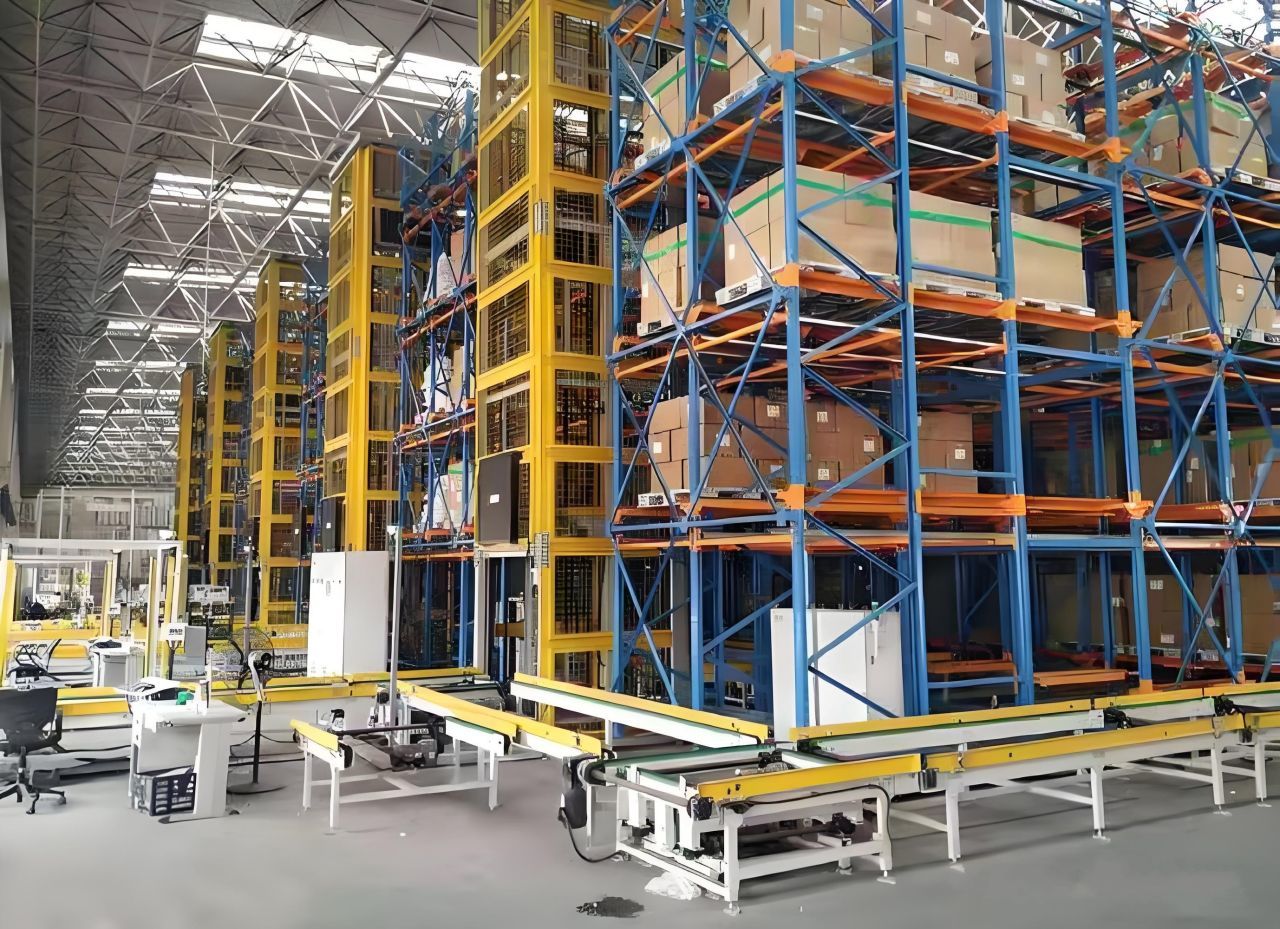
3. Automated Storage and Retrieval System (AS/RS for Semiconductor)
Design Features :
Stacker crane + conveyor line automated access, supporting cleanroom environments.
Interacts with MES/WMS systems to achieve intelligent scheduling.
Applicable Scenarios :
Large-scale wafer and chip finished product warehousing.
Semiconductor logistics centers with high throughput requirements.
4. Nitrogen Cabinets and Humidity-Proof Cabinets (Nitrogen Cabinets & Dry Storage)
Design Features :
Sealed design, nitrogen filling or dehumidification, controlling oxygen content and humidity.
Intelligent monitoring of temperature and humidity, alarm prompts.
Applicable Scenarios :
Storage of photoresists and high-purity chemicals.
Short-term storage of easily oxidized materials (such as copper bonding wires).
5. Flow Racking
Design Features :
Inclined design, using gravity sliding to achieve FIFO (First-In, First-Out).
Can be used with RFID tags to manage batches.
Applicable Scenarios :
Packaging substrates, lead frames, and other standardized materials.
Raw material warehouses with high-frequency access.
6. Mobile Shelving
Design Features :
Electric high-density storage, saving space.
Access can be remotely controlled through the WMS system.
Applicable Scenarios :
Storage of tools and consumables in cleanrooms.
Space-constrained R&D laboratories.
III. Key Factors in Semiconductor Rack Selection
| Considerations | Selection Requirements |
|---|---|
| Material Characteristics | Wafers → Dedicated wafer racks; Chemicals → Humidity-proof cabinets/nitrogen cabinets; Chips → Anti-static racks. |
| Cleanliness Level | Class 1~1000 cleanrooms require the use of stainless steel or anti-pollution materials. |
| Automation Level | High throughput selects AS/RS; small-batch R&D selects mobile racks. |
| Space Utilization | High-density storage selects AS/RS or mobile racks; flexible access selects flow racks. |
| Cost Control | Nitrogen cabinets are expensive, but necessary; anti-static racks have a high cost-performance ratio. |
IV. Industry Application Case Studies
1. Wafer Manufacturing (such as TSMC, Samsung)
Main racks Automated wafer storage system (AMHS+AS/RS).
Core Requirements Cleanroom environment, high-precision handling, wafer batch management.
2. Packaging and testing (e.g., ASE Technology, Amkor)
Main racks Anti-static racks + flow-through racks.
Core Requirements Electrostatic protection, high-frequency access, FIFO management of packaging materials.
3. Semiconductor equipment manufacturers (e.g., ASML, Applied Materials)
Main racks Intelligent mobile racks + nitrogen cabinets.
Core Requirements Precision component oxidation prevention, tool traceability.
V. Future Trends: Intelligent and Flexible Warehousing
AI + Internet of Things (IoT) Real-time monitoring of rack environment (temperature, humidity, particulate matter) via sensors.
Robot Collaboration AMR (Autonomous Mobile Robot) and rack linkage to achieve "goods-to-person" picking.
Digital Twin Virtual warehouse simulation to optimize storage layout.
VI. Conclusion and Suggestions
The selection of racks for semiconductor companies should be based on material safety, cleanliness, and automation as the core, and choose a solution based on production scale and budget:
Wafer Fab AMHS+AS/RS is preferred;
Packaging and Testing Facility Anti-static racks + flow-through racks are suitable;
R&D Center Intelligent mobile racks + nitrogen cabinets can be configured.
In the future, with the development of semiconductor process refinement and intelligent manufacturing, the warehousing system will evolve towards a higher degree of automation, intelligence, and flexibility Companies should plan for suitable solutions in advance.
Hot Products
Related Articles
Get a free quote
We welcome any inquiry you may have. Tell us about your project to get a free quote.
National Service Hotline
Contact Email
Foshan City, Nanhai District, Shishan Town, Guanyao Ligang Zixia Industrial Zone
Scan to view the website