
GUANGDONG XIEDA INTELLIGENT EQUIPMENT CO., LTD.
Professional manufacturer of storage space

News
News
Definition and storage advantages of high-bay racking
Keywords:
Publish Time:
2025-08-05
The following is a detailed explanation of the definition and storage advantages of high-bay racking:
Definition
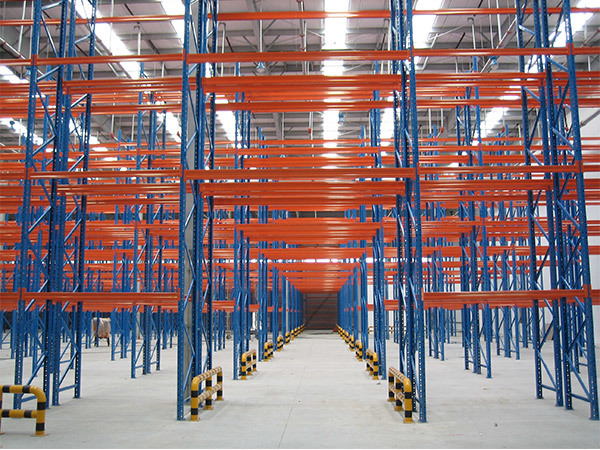
1. Basic Concept: High-bay racking is a core piece of equipment used in automated high-rise warehouses, generally referring to racking systems of considerable height. According to industry practice, the height generally exceeds 10 meters, some reaching 30 meters or even higher, achieving vertical stacking storage of goods through a multi-layer structure.
2. Functional Positioning: It is the optimal choice for modern warehousing to transform planar space into three-dimensional space. Combined with automated equipment such as aisle stacking cranes and shuttle cars, and management systems, it forms a highly efficient logistics operation system.
3. Constituent Elements: Includes load-bearing components such as columns and beams, manufactured using high-quality steel to ensure stability; it also integrates a computer-controlled automated system to support precise access and dynamic management.
Storage Advantages
1. Significantly Improved Space Utilization
- Vertical Expansion Capability: Expanding capacity by increasing height rather than horizontal area, the storage capacity per unit area can reach 4-7 times that of an ordinary warehouse, and even up to 20-30 times at maximum.
- Three-Dimensional Layout: Utilizing a multi-layer structure to reduce ground occupation, especially suitable for scenarios with limited land resources.
2. Enhanced Operational Efficiency and Accuracy
- Automated Operation: Utilizing AGV vehicles, stacking machines, and other equipment to achieve fast and accurate goods access, shortening warehousing time and reducing human error rates.
- Intelligent Scheduling System: Optimizing path planning through WMS (Warehouse Management System), prioritizing urgent orders or goods nearing their expiration date, further improving turnover efficiency.
3. Cost Savings and Improved Safety
- Reduced Manpower: Unmanned operation mode reduces reliance on manual labor, resulting in lower long-term operating costs.
- Risk Mitigation: Suitable for special environments such as low-temperature or toxic environments, avoiding direct contact between personnel and hazardous areas; it also reduces the risk of damage to goods due to compression.
4. Refined and Transparent Inventory Management
- Real-time Monitoring: Relying on sensor technology and data analysis tools, dynamically tracking inventory status to ensure that accounts match the actual inventory.
- First-In, First-Out Strategy: The system automatically executes the "first-in, first-out" principle to prevent product obsolescence or expiration losses.
5. Flexibility and Scalability
- Modular Design: Racks can be adjusted in height, number of layers, and arrangement according to needs, adapting to the storage needs of different specifications of goods.
- Scalable Adaptation: It can meet the basic applications of small and medium-sized enterprises, and can also support high-frequency, large-volume logistics scenarios for large enterprises.
6. Enhanced Corporate Image and Competitiveness: As a representative of modern logistics technology, the application of high-bay racking warehouses reflects the company's technological innovation capabilities and management level, helping to enhance customer trust and market competitiveness.
High-bay racking, through the synergistic effect of space reconstruction, automation technology, and intelligent management, solves the problems of low efficiency, high cost, and rough management in traditional warehousing, becoming a key facility in promoting the upgrading of the logistics industry.
Hot Products
Related Articles
Get a free quote
We welcome any inquiry you may have. Tell us about your project to get a free quote.
National Service Hotline
Contact Email
Foshan City, Nanhai District, Shishan Town, Guanyao Ligang Zixia Industrial Zone
Scan to view the website