
GUANGDONG XIEDA INTELLIGENT EQUIPMENT CO., LTD.
Professional manufacturer of storage space

News
News
What is the general weight capacity standard for heavy-duty shelving?
Keywords:
Publish Time:
2025-08-05
The weight capacity standard for heavy-duty racking is not a fixed value but a range affected by multiple factors. A detailed explanation from various sources is provided below:
1. Typical Range: Commonly available heavy-duty racking typically has a single-layer load capacity between 1000kg and 5000kg. This range covers the needs of most industrial scenarios, such as storing cartons, mechanical equipment parts, and other moderately heavy goods.
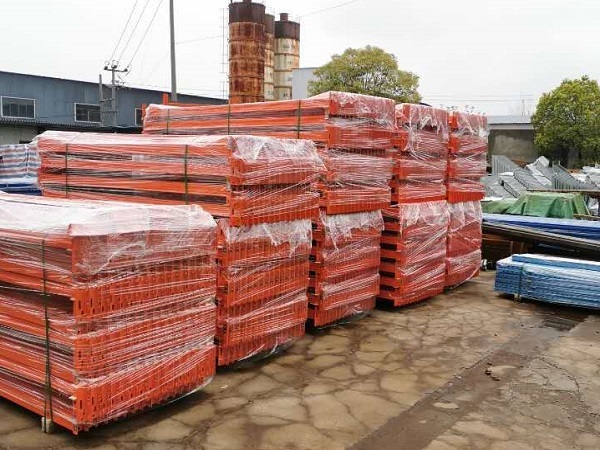
2. Customized Upper Limit: For specially designed high-strength steel racking (such as those using H-section steel columns and thicker beams), the load capacity can be further increased to 5 tons or more per layer. Such solutions are often used for large metal products, heavy machinery, and other overload scenarios.
3. Mainstream Choice in Practical Applications: Many warehouses tend to purchase standardized products with a load capacity of approximately 2 tons per layer to balance cost and performance. If higher precision matching to specific cargo weight is required, customization can achieve precise adaptation.
4. Analysis of Influencing Factors:
- Material Strength: Q345 steel has higher yield strength than Q235 steel, and increased plate thickness can significantly improve load-bearing performance;
- Structural Design: H-section columns combined with diagonal bracing can increase torsional resistance by 20%-40%, and scientific and reasonable control of beam span can effectively reduce deflection deformation;
- Safety Factor: Industry standards require medium and above-sized racking to meet a safety redundancy of 3 times or more to cope with dynamic load impact and unexpected overload situations;
- Environmental Adaptability: Factors such as ground flatness, temperature and humidity changes, and the vibration of automated equipment may cause deviations between theoretical values and actual load-bearing capacity.
When selecting racking, it is recommended to conduct a comprehensive assessment based on cargo characteristics (such as size distribution and access frequency), warehouse foundation conditions, and budget. If necessary, use finite element analysis to verify structural reliability. Also, pay attention to the maximum load capacity indicated to avoid exceeding the limit and causing safety hazards.
Hot Products
Related Articles
Get a free quote
We welcome any inquiry you may have. Tell us about your project to get a free quote.
National Service Hotline
Contact Email
Foshan City, Nanhai District, Shishan Town, Guanyao Ligang Zixia Industrial Zone
Scan to view the website