
GUANGDONG XIEDA INTELLIGENT EQUIPMENT CO., LTD.
Professional manufacturer of storage space

News
News
Guangdong Xieda: How to prevent warehouse racking deformation?
Keywords:
Publish Time:
2025-08-05
Here are some effective methods to prevent the deformation of warehouse shelves, combining material selection, design specifications, operation management, and maintenance and repair aspects:
Design and Material Selection Phase
1. Select high-quality steel
- Prioritize the use of high-strength, corrosion-resistant steel as the main load-bearing components to ensure that the mechanical properties of the base material meet the standards. Avoid deformation due to poor-quality materials leading to weak structures or long-term stress.
- Establish a strict supplier screening mechanism and material inspection system to prevent unqualified raw materials from entering the production line.
2. Scientific Calculation and Reasonable Design
- Based on the actual weight, volume, and storage needs of the goods, accurately calculate the load-bearing capacity of each layer and the overall stability. Simulate the stress conditions using tools such as finite element analysis to optimize the structural layout of beams and columns.
- Follow the principle of "heavy does not press light, large does not press small," placing heavy items on the bottom layer and light goods on the upper layer; large items on the bottom, small items on top, to balance the pressure distribution.
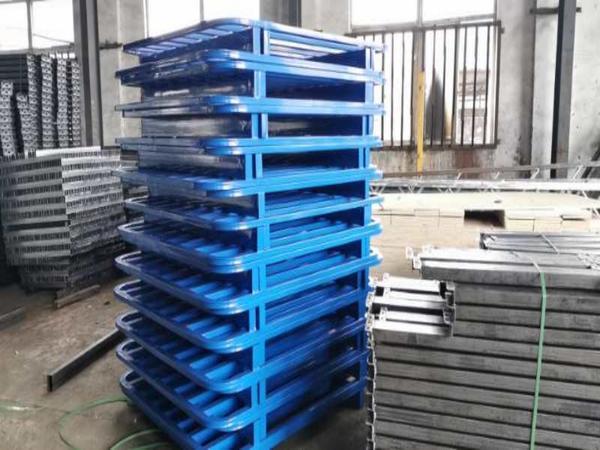
3. Customized Solutions
- Provide personalized designs based on the warehouse environment (such as ground conditions, temperature and humidity) and special cargo characteristics. For example, add anti-slip devices for easily rolling goods, or add anti-toppling components to high-level shelves.
Installation and Debugging Phase
1. Professional Team Precise Construction
- Installed by experienced technicians according to the drawing specifications, ensuring that the verticality of the columns and the horizontality of the beams meet the standards. Pay special attention to the fact that the concrete foundation needs to be fully solidified (28 days of continuous curing is recommended) to prevent ground settlement from causing offset.
- All connecting parts (such as screws and nuts) must be tightened in place and equipped with locking devices to prevent loosening and falling off.
2. Comprehensive Inspection and Adjustment
- Conduct load tests after installation to check the welding quality and structural stability of key nodes. Correct any problems found in a timely manner to ensure that all components work together without deviation.
Daily Use Standards
1. Strictly Control Load Limits
- Strictly abide by the maximum load marking of the shelves and prohibit overloading. At the same time, avoid eccentric loading, that is, the goods on the same layer should be evenly distributed to avoid concentrated accumulation in a certain area causing excessive local stress.
2. Standardized Handling Operations
- When using a forklift, maintain low-speed driving to avoid colliding with shelf columns or beams. Physical isolation measures such as anti-collision barriers and warning signs can be set up in the passageway to reduce the risk of accidental collisions.
- Follow the principle of "handle with care" when storing and retrieving goods to reduce the damage to the structure caused by dynamic impact forces.
3. Optimize Goods Placement Methods
- Use palletized storage to improve stability. For irregularly shaped items, the position can be fixed by bundling or supporting. Regularly organize inventory to prevent long-term backlog from causing accumulated deformation.
Maintenance and Monitoring System
1. Regular Inspection and Maintenance
- Check the welding points and screw connections for looseness every month, and check whether the surface anti-corrosion coating has peeled off or rusted. Replace damaged parts in time and lubricate moving parts.
- Record the results of each inspection to form an archive, which is convenient for tracking aging trends and intervening in advance.
2. Environmental Adaptability Management
- Keep the warehouse dry and ventilated, control the fluctuation range of temperature and humidity, and avoid deformation of metal parts due to thermal expansion and contraction. Dehumidification equipment or anti-rust paint can be added in humid areas.
3. Employee Training and Emergency Preparedness
- Conduct safety education and technical training for operators to strengthen their awareness of shelf protection. Develop contingency plans, including evacuation routes and emergency reinforcement measures in case of sudden deformation.
Technological Innovation and Upgrades
1. Introduce Intelligent Monitoring Technology
- Install sensors to monitor the stress state of the shelves in real time. When approaching the safety threshold, automatically alarm and prompt to adjust the load distribution. Some high-end systems can also perform predictive maintenance to extend the service life of the equipment.
2. Research and Development of New Structural Materials
- Explore the application scenarios of lightweight and high-strength materials such as composite materials or honeycomb aluminum plates, reducing the potential deformation risk caused by self-weight while ensuring strength.
Through the above multi-dimensional comprehensive control, the probability of warehouse shelf deformation can be significantly reduced, ensuring the safety and efficiency of logistics operations. Different industries can implement corresponding measures based on specific scenarios. For example, food cold chain warehouses need to pay special attention to moisture and corrosion prevention, while automated three-dimensional warehouses rely more on precision manufacturing processes.
Hot Products
Related Articles
Get a free quote
We welcome any inquiry you may have. Tell us about your project to get a free quote.
National Service Hotline
Contact Email
Foshan City, Nanhai District, Shishan Town, Guanyao Ligang Zixia Industrial Zone
Scan to view the website