
GUANGDONG XIEDA INTELLIGENT EQUIPMENT CO., LTD.
Professional manufacturer of storage space

News
News
Rack Material: Performance Comparison and Application Scenarios of Cold-Rolled Steel and Aluminum Alloy
Keywords:
Publish Time:
2025-08-08
The following is a comparison of the properties of cold-rolled steel and aluminum alloy in storage rack materials, as well as an analysis of their application scenarios:
Performance Comparison
1. Strength and Load-Bearing Capacity
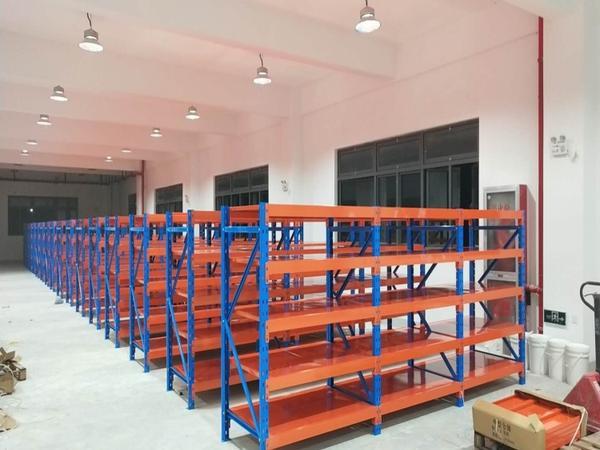
- Cold-rolled steel: Possesses extremely high strength and hardness, suitable for carrying heavy goods. Its excellent mechanical properties meet the needs of high-strength, high-load storage; after special treatment (such as galvanizing), its corrosion resistance is further improved, suitable for harsh environments. However, it is heavier, making handling and installation relatively laborious.
- Aluminum alloy: The density is only about 1/3 that of steel, making it lightweight, but its load-bearing capacity is limited, usually used for light goods or occasions where weight reduction is required. Although its strength-to-weight ratio is close to that of high-alloy steel, it still cannot reach the load-bearing capacity of cold-rolled steel under the same volume. However, it has good corrosion resistance, and the surface oxide film can effectively resist erosion from humid, acidic, and alkaline environments.
2. Processing and Formability
- Cold-rolled steel: Good ductility and plasticity, easy for stamping, bending and other processes, can accurately control size and shape, suitable for manufacturing rack components with complex structures and high precision requirements. For example, it can be used for customized large-scale storage systems.
- Aluminum alloy: Processing performance is also excellent, especially deformable aluminum alloys can be made into various profiles through rolling, extrusion, etc., and are easy to cut and assemble. However, its rigidity is lower, and additional support structures may be needed to enhance stability.
3. Corrosion Resistance and Lifespan
- Cold-rolled steel: Relies on surface treatment processes (such as galvanizing or spraying anti-corrosion paint) to improve rust resistance. Regular maintenance is still required when exposed to humid environments for long periods. Untreated steel is prone to oxidation and rust, affecting its lifespan.
- Aluminum alloy: The naturally formed dense aluminum oxide protective film gives it excellent corrosion resistance, and no additional protection is needed to maintain stability in high-humidity and chemically corrosive environments. Low maintenance cost and long lifespan.
4. Cost and Economy
- Cold-rolled steel: Raw material prices are relatively low, and the production process is mature, with overall controllable costs, making it the preferred material for most heavy-duty warehouses. However, transportation and installation costs may increase due to increased weight.
- Aluminum alloy: Higher manufacturing costs and large initial investment, but due to its light weight and maintenance-free characteristics, the whole life cycle cost has more advantages in certain specific scenarios. Often used in high-end fields with special needs for aesthetics and lightweight design.
Application Scenarios
1. Typical Applications of Cold-rolled Steel
- Heavy-duty storage scenarios: Such as manufacturing raw material warehouses, logistics centers, etc., where large equipment or high-density stacking needs to be stored. For example, using cold-rolled steel racks in auto parts warehouses ensures safety and stability.
- Occasions with high precision requirements: Industries requiring strict tolerance matching (such as mechanical parts storage) utilize its high dimensional accuracy to achieve efficient sorting and management.
- Low-cost bulk storage: Suitable for projects with limited budgets and where functionality is the primary driver, reducing costs through standardized design.
2. Typical Applications of Aluminum Alloy
- Storage of lightweight, high-value items: Electronic components, precision instruments, etc., which are susceptible to damage from pressure, combining shock and anti-static requirements. For example, clean rooms in semiconductor factories often use aluminum alloy racks.
- Adaptability to special environments: Chemical laboratories, offshore platforms, etc., where corrosive media exist, its excellent corrosion resistance makes it the preferred material. In addition, aseptic workshops in the pharmaceutical industry also tend to use easy-to-clean aluminum alloy structures.
- Combination of aesthetics and display function: Retail stores, exhibition halls, etc., where visual effects are important, the modern appearance of aluminum alloy can enhance the grade of the space.
Cold-rolled steel and aluminum alloy are two mainstream choices for storage rack materials. Each has its unique performance advantages and plays a key role in different application scenarios. Actual selection requires a comprehensive evaluation based on factors such as cargo characteristics, environmental conditions, and budget constraints.
Hot Products
Related Articles
Get a free quote
We welcome any inquiry you may have. Tell us about your project to get a free quote.
National Service Hotline
Contact Email
Foshan City, Nanhai District, Shishan Town, Guanyao Ligang Zixia Industrial Zone
Scan to view the website